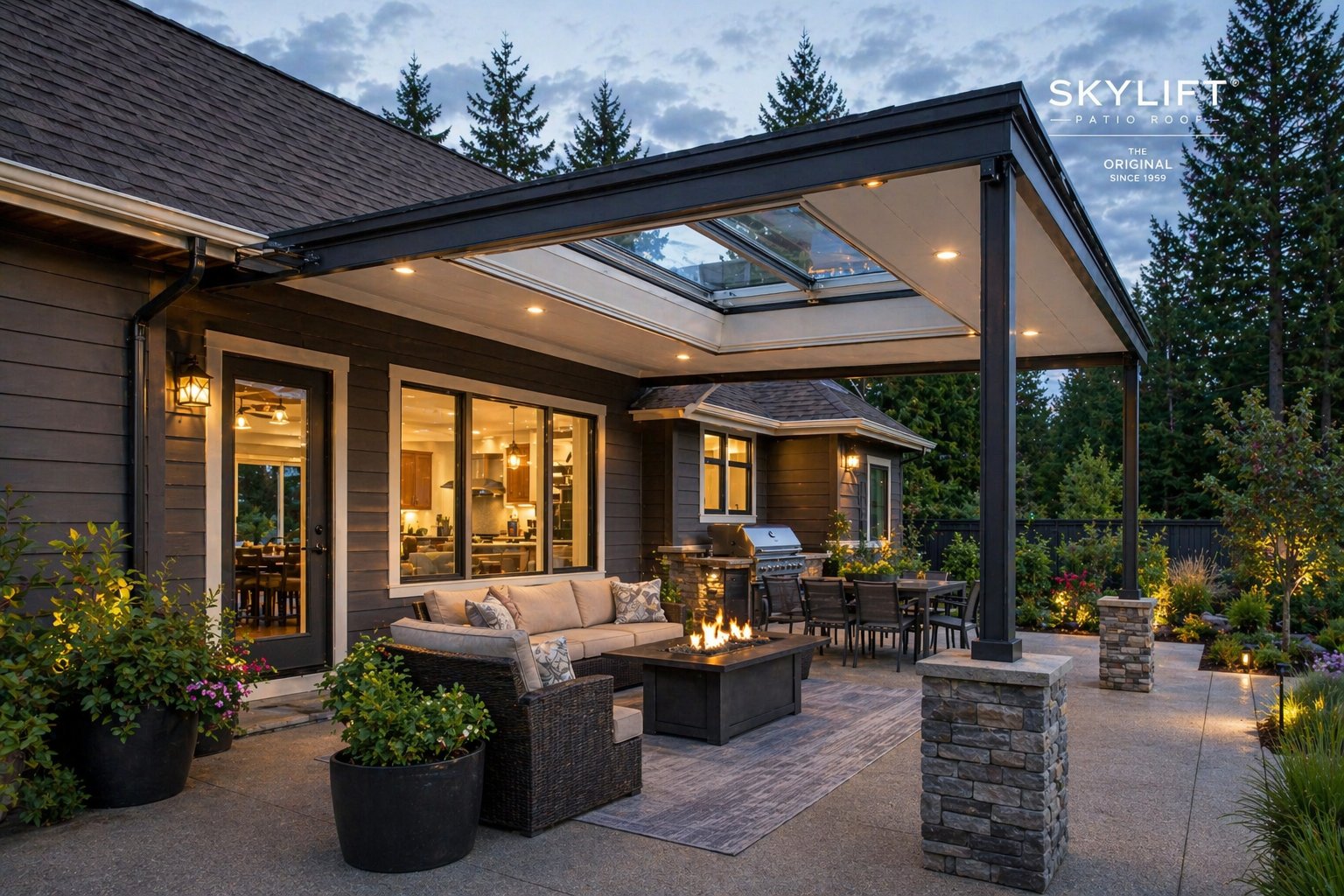
Clark County gets 40+ inches of rain a year, but that doesn't mean your outdoor space has to sit empty nine months out of twelve. Left Coast Exteriors designs and installs patio cover systems that make your backyard genuinely usable, in any season.
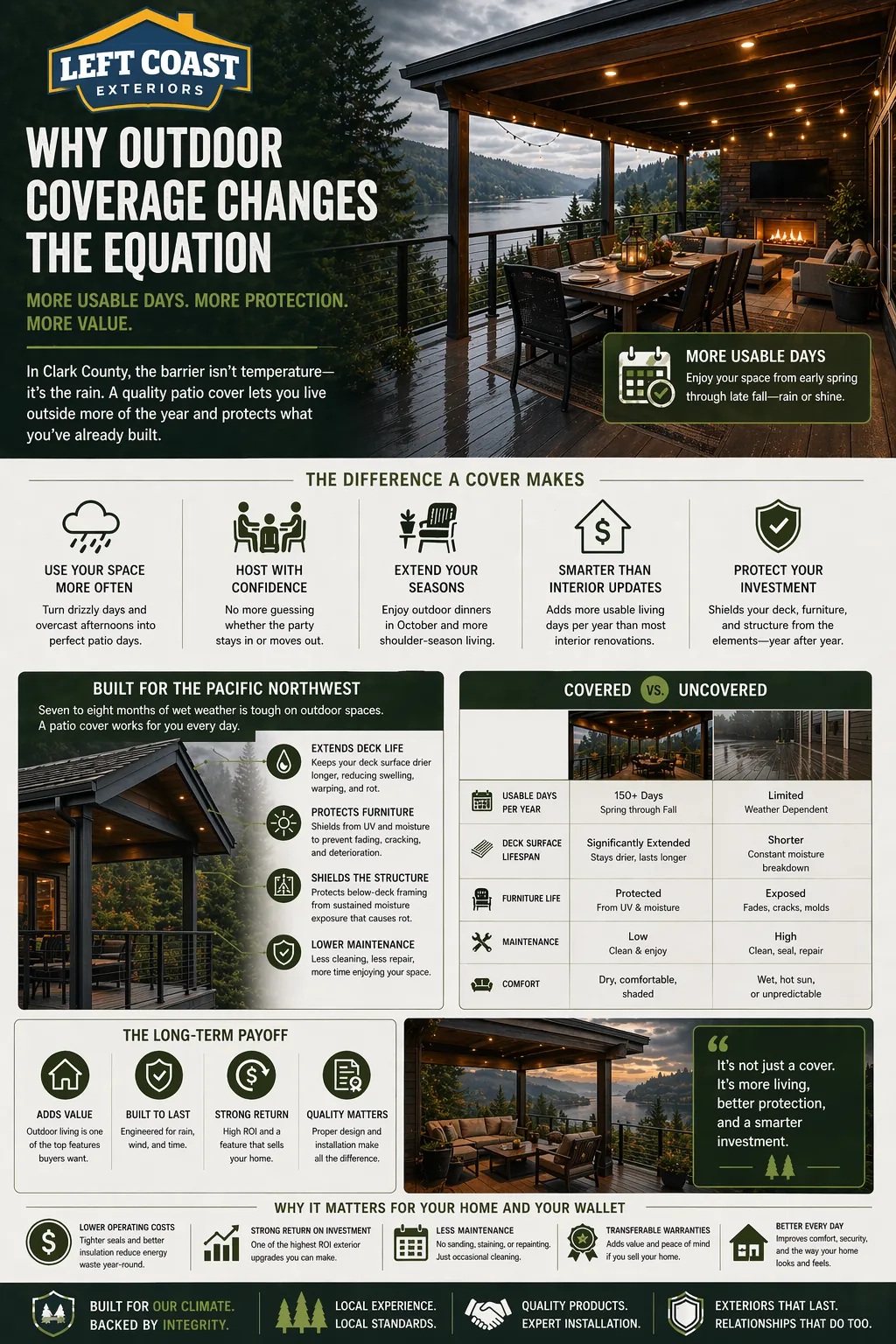
Pacific Northwest outdoor living isn't a summer-only story. Vancouver and the surrounding Clark County communities have a mild climate: winters rarely freeze hard, and the shoulder seasons (March through May and September through October) offer genuine outdoor weather. The barrier isn't temperature; it's the persistent drizzle, the overcast afternoons, the light rain that makes an uncovered patio feel like a gamble. A quality patio cover changes that calculus entirely.
With proper coverage, you can eat dinner outside in October. Guests don't have to guess whether the gathering is inside or out. You use the outdoor square footage you've already invested in rather than retreating to the living room the moment a cloud moves in. For many Clark County homeowners, a patio cover adds more usable living days per year than any interior renovation of comparable cost.
Beyond lifestyle, a cover serves a practical structural purpose. In a climate where surfaces are wet for seven to eight months of the year, an overhead cover directly extends the life of your deck surface, protects outdoor furniture from UV and moisture degradation, and shields any below-structure framing from the sustained moisture exposure that causes rot. A cover isn't just a comfort upgrade. It's a long-term exterior protection decision.
Both scenarios start the same way: a site visit, an honest look at your structure and goals, and a recommendation that fits your property and budget.
The right cover for your home depends on your architecture, your exposure (sun, rain, or both) and whether you want complete weather protection or a blend of shade and filtered light.
The most practical choice for Pacific Northwest homeowners who want complete weather protection. Solid aluminum covers shed rain entirely, require virtually no maintenance, and are available in a wide range of colors to match your exterior finishes. They're the right call for covered dining areas, year-round usable spaces, and homes where moisture protection matters more than filtered light. Longevity in this climate is excellent: aluminum doesn't rot, warp, or require seasonal treatment.
Insulated aluminum panels offer the same weather-shedding performance as standard solid aluminum but with a foam-core interior that reduces heat transmission in summer and dramatically improves acoustics during rain events. If you've ever sat under a solid aluminum cover in a November Northwest rain and found the noise intrusive, insulated panels solve that directly. They're also the right choice for spaces adjacent to living areas where sound management matters.
Open lattice designs deliver shade from direct summer sun while allowing airflow and filtered light to reach the patio surface. They work well when your primary concern is summer heat rather than rain, or as a middle ground for homes where a solid cover would feel visually heavy. The aluminum construction means no maintenance beyond an occasional rinse. Not the right choice for spaces where rain protection is the goal.
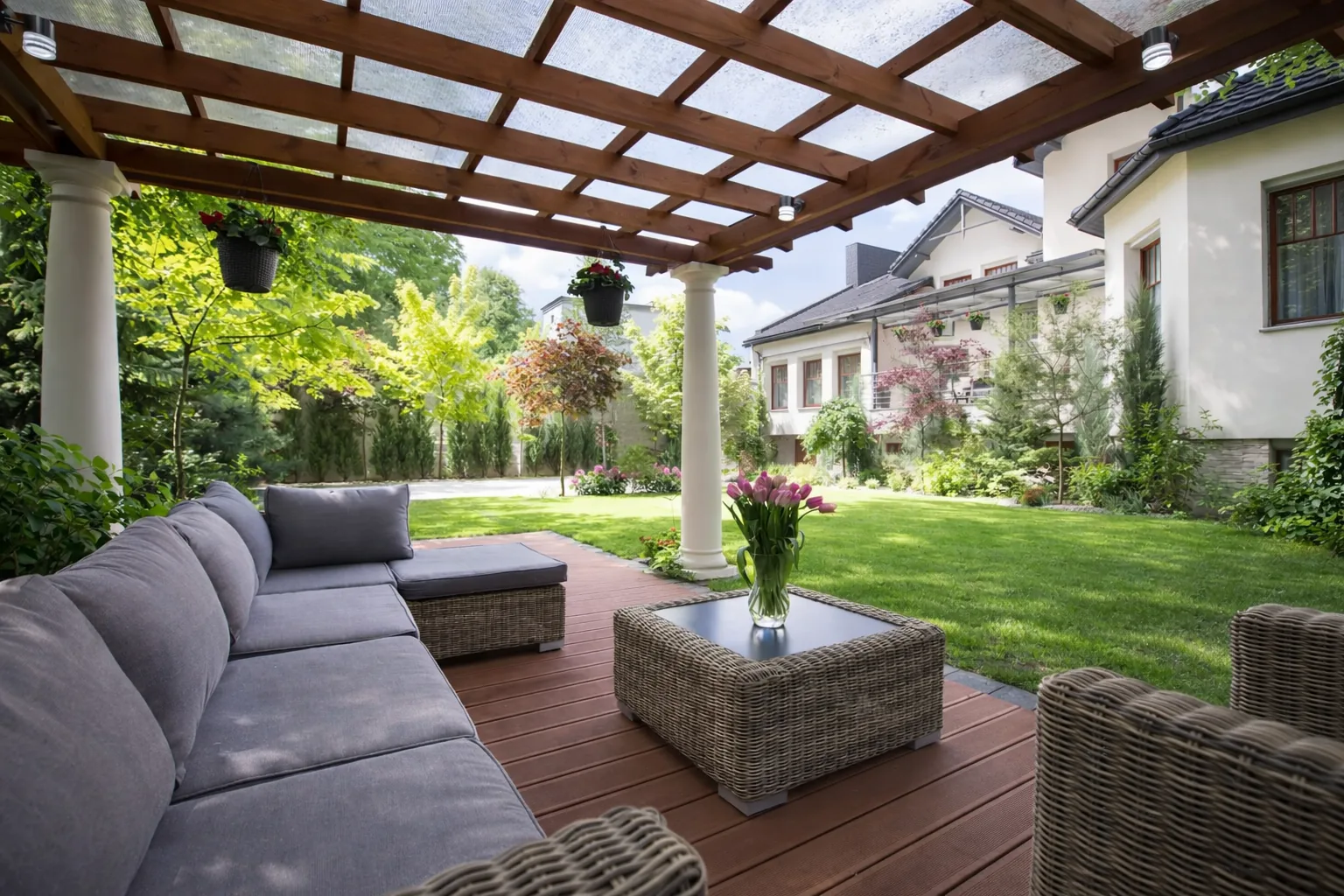
For homeowners who want the warmth and visual weight of wood, a custom-built pergola or shade structure adds definition and character to an outdoor space. We use cedar and pressure-treated lumber selected for Pacific Northwest moisture exposure. Wood structures require more maintenance than aluminum: periodic sealing or staining in this climate, but offer genuine design flexibility for homes where architectural character is the priority.
Attached patio covers that connect directly to the home's roofline deliver the most integrated look and the most effective weatherproofing. When done correctly, they look like a natural extension of the home rather than an add-on. We handle the structural attachment, flashing at the wall connection, and all permit requirements for attached designs. Because we also install roofing and siding, we understand exactly how a roof-tie cover needs to integrate with what's already there.
In a climate with 40+ inches of annual rainfall and mild temperatures year-round, outdoor coverage isn't a luxury upgrade. It's a practical exterior decision that pays for itself in usability and protection.
Sustained moisture exposure is the primary cause of composite fading and wood rot. A cover that keeps direct rainfall off your deck surface can meaningfully extend its service life, especially on older pressure-treated structures that aren't designed for continuous wet exposure.
Clark County averages roughly 144 rainy days per year, but many are light drizzle or overcast, not heavy rain. A covered patio makes those days fully usable. Most homeowners find they use their outdoor space 60–80 more days per year after a cover installation than they did without one.
Hosting in the Pacific Northwest without a covered space means checking the forecast obsessively and having a backup plan. A covered patio eliminates that uncertainty. Guests know where the gathering is, and a light rain doesn't send everyone inside before dinner is finished.
Outdoor furniture, grills, and any equipment left on an uncovered patio in Clark County faces sustained moisture for more than half the year. UV degradation from summer sun compounds the problem. A cover dramatically extends the usable life of everything beneath it: fewer replacements, less seasonal storage labor.
A well-designed patio cover that integrates with the home's exterior, matched finishes, proper roofline connection, clean trim details, adds to the visual impression of the property from the back yard and increases the perceived livable square footage for buyers. A deteriorated or absent cover does the opposite.
Patio cover installation is structural work that connects directly to your home's exterior systems. Because we also install roofing, siding, and gutters, we understand how a cover integrates with what's already there, and we get the flashing, attachment, and drainage details right the first time.
Clark County requires permits for most attached patio covers and structural installations. We pull the permit, schedule the inspection, and close it out properly. You don't navigate the jurisdiction yourself. No shortcuts that leave you with an unpermitted structure when you go to sell or file an insurance claim.
We come to your property, look at your existing structure, your roofline, your sun and rain exposure, and your actual goals, and recommend what makes sense for your specific space. If a simpler solution will serve you better than an expensive custom build, we'll tell you. We're not in the business of selling projects that exceed what your property actually needs.
From the first site visit to your final walkthrough. Here's exactly what to expect, with no moving targets.
We visit your property to evaluate your existing deck or patio structure, your roofline integration opportunities, sun orientation, drainage, and what you actually want to do with the space. You get honest input about which cover types will work for your specific situation. Not a product pitch.
Based on the site assessment, we develop a design and material recommendation specific to your home. You receive a written, itemized estimate covering materials, structural work, permit fees, and installation, line by line, with no ballpark figures. We walk you through the options and make a clear recommendation based on your goals and budget.
For attached covers and most structural installations, we handle the permit application with Clark County or the relevant jurisdiction. Once approved, we schedule your installation window, typically within two to four weeks of contract signing. We'll confirm the schedule and give you realistic day-count expectations before work begins.
Our crew handles any required modifications to the existing deck or patio, installs footings or ledger connections as required by the design, builds the cover structure, and finishes with all trim, flashing, and drainage details. Attached covers get proper wall flashing, not just caulk. Every structural connection is done to code and inspected.
We do a thorough walkthrough with you before we leave, confirming the cover performs as intended, checking drainage on solid covers, and making sure all trim and attachment details are finished correctly. We leave the site clean and make sure you understand what to expect from the system before we're gone.
For most attached patio covers, yes. Clark County requires a building permit for patio covers that attach to the home's structure, including roof-tie covers and covers attached to the wall via a ledger. Freestanding pergolas or shade structures below a certain square footage may be exempt, but the threshold varies. We'll confirm permit requirements during the site assessment. We handle the permit application as part of our standard process, and we close it out properly with the inspection. Contractors who skip permits to save time leave homeowners with unpermitted structures that create complications at resale and may void homeowner's insurance coverage for damage to the structure.
An attached patio cover connects directly to the home, typically via a ledger board fastened to the wall or a connection at the roofline. This creates the most integrated look and the strongest weatherproofing, since the wall connection can be properly flashed to prevent water intrusion. Attached covers generally require a permit and more structural planning. A freestanding cover stands on its own posts without connecting to the house. It has more placement flexibility, typically requires less permitting, but doesn't integrate with the home's appearance as seamlessly. We'll recommend the right approach based on your property layout, the existing structure, and your aesthetic goals.
Most standard patio cover installations are completed in one to three days. A straightforward aluminum cover on an existing deck typically takes one to two days. More complex projects (attached roof-tie covers, custom wood structures, or covers on decks that need structural modifications) may run two to four days. The permit process adds lead time before installation begins; we'll build a realistic schedule into your estimate so you know what to expect from contract to completion.
For year-round weather protection in a high-rainfall climate, solid aluminum, and particularly insulated aluminum panel covers, performs best. It sheds rain completely, requires no maintenance beyond cleaning, doesn't rot, warp, or corrode under Pacific Northwest moisture exposure, and lasts decades with minimal intervention. If noise during rain events is a concern, insulated panels are the upgrade that addresses that directly. Wood pergolas and open lattice are appropriate when shade or aesthetics are the primary goal and full rain protection isn't required. Polycarbonate panels are an option but typically have a shorter service life in UV-heavy environments and can yellow over time. We'll make an honest recommendation based on what you actually need from the cover, not what has the highest margin.
Yes, in most cases. For wood deck structures, we assess the framing to confirm it can support the cover loads. Posts typically rest on the existing joists or are anchored to new footings. For concrete patios, post bases are anchored into the slab or new concrete footings are poured as required. We evaluate the existing structure during the site assessment and include any necessary structural work in the estimate before signing begins. If your existing structure isn't in condition to support a cover, we'll tell you what needs to be addressed and what that scope involves.
Yes. We offer flexible financing options through third-party lenders, including 0% intro APR programs and terms from 12 to 84 months. Patio cover projects vary widely in scope and cost, and financing can make a quality installation more accessible than paying out of pocket. Ask your project consultant about current programs when you receive your estimate.
"We had an uncovered back deck for eight years and just accepted that we couldn't use it half the year. Left Coast came out, assessed the structure, and installed an insulated aluminum cover over the whole thing. The difference is remarkable. We used it through November, through the rain, with the outdoor heater on. We genuinely feel like we gained a room. The installation was clean, the permit was pulled, and the crew finished in two days."
"Our old aluminum cover was original to the house, 25 years old, faded, with a section that had caved from a branch. We knew it needed to go. Left Coast replaced the whole thing with a solid aluminum cover in a color that actually matches the siding. The old cover looked like an afterthought; the new one looks like it belongs. They pulled the permit, did the whole job in one day, and the site was spotless when they left."
"We did the deck and the patio cover together as one project. Left Coast rebuilt our pressure-treated deck with TimberTech and installed a solid aluminum cover at the same time. Having one crew handle both made the whole thing cleaner. The cover posts tied into the new deck structure properly and everything is flashed correctly at the house. We've had two wet falls since and the deck looks exactly the same as install day. Would not hesitate to recommend them."
Financing Available
You've been putting off outdoor coverage because of timing or budget. We offer flexible financing so you can stop losing outdoor living days to the next rainy season while you wait for the right financial moment.
Most Clark County patio cover installations: $4,000–$14,000. Monthly payments with financing are often less than you'd expect.
Financing offered through third-party lenders. Subject to credit approval. Ask your project consultant for current terms and available programs.
Request a Free EstimateOther Services
We serve homeowners throughout Southwest Washington and the greater Portland area. View full service area →